Synthetic Minds | Are Carmakers Quietly Becoming Humanoid Makers?
Synthetic Minds | Are Carmakers Quietly Becoming Humanoid Makers?
The Synthetic Minds newsletter offers short daily insights to get you thinking. If you enjoy it, please forward. All signals are powered by Futurwise. If you need more insights, subscribe to Futurwise and get 25% off for the first three months!
I have just launched the Intelligence Age Scorecard! It will help you understand how ready your organization is for the Intelligence Age.
Today’s topic: Robotics
Carmakers Are Becoming Robot Companies In Plain Sight
Hyundai has bought a company that makes backflipping robots, not to add robots to its car plants. It bought them because the car business it has run for half a century is starting to soften.
The carmakers can see their own market contracting. So they are repurposing the one asset that survives the shift, the factory, for the market that will outgrow the car market.
Hyundai has taken full ownership of Boston Dynamics, and its parts arm already builds the robot's joints. The same lines that stamp cars can build humanoids.
It is not alone. China's carmakers are pivoting hard. BYD is developing humanoids it may sell through its dealers; XPeng targets a million units by 2030; Chery already lists one for $41,400.
The prize is vast. Citi projects a $7 trillion humanoid market of 648 million units by 2050, larger than the global car industry. Musk even expects more humanoid robots than people by 2040.
Meanwhile the core business is under pressure. Goldman Sachs expect self-driving rides to fall below the cost of owning a car around 2035. That is the point where private ownership stops making sense for a large share of city drivers.
That's the robot story. Here is the signal.
Read the Hyundai deal correctly and it is not a robotics acquisition. It is a car company buying a second act.
The asset that transfers is not the brand or the showroom. It is the factory; the tooling, the supply chain, the discipline of building complex machines by the million. A carmaker is, underneath, a company that mass-produces robots that happen to have four wheels.
So when the car becomes a service you summon, the plant does not retire. It retools, for the robot that walks.
The same logic that pulled the AI model layer in-house has reached the factory floor. First the intelligence was owned. Then the body.
The carmaker intends to own both.
Here is what nobody planned for. The demand rests on a forecast, not a fact, robotaxis are a projection, and the humanoid market is a spreadsheet, not an order book. Bet the plant on it and stall, and the most expensive industrial capacity on earth sits idle.
There is a sharper edge. A carmaker that pivots to humanoids is no longer selling its customer a car. It is selling that customer's employer a worker.
So the question your board should debate is not whether to add robots to the line. It is whether your core product is about to become a subscription, and whether your factory, not your product, is the thing worth defending.
The carriage makers believed they were in the carriage business. The few that survived knew they built whatever moved people, and they retooled before the road did.
The Intelligence Age Scorecard
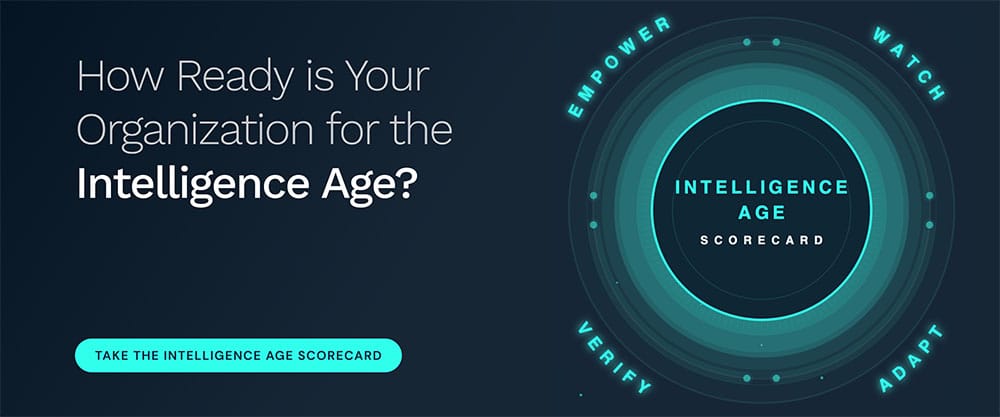
A carmaker has bought a robotics company because its factory, not its car, is the asset worth keeping, and its rivals are racing to do the same. WAVE — Watch, Adapt, Verify, Empower — asks whether you are still watching the robot demos or already verifying which of your own assets survive when your product becomes a service.
Take the Intelligence Age Scorecard to benchmark your readiness for the next two quarters, and the next five years. Or read the public Intelligence Age Scorecard of Qantas, Woolworths, Telstra or Commonwealth Bank first.
If this newsletter was forwarded to you, you can sign up here.
Thank you.
Mark
Frequently asked questions
Why did Hyundai buy Boston Dynamics?
Hyundai bought Boston Dynamics because its core car business is starting to soften, and it saw an opportunity to repurpose the one asset that survives that shift, the factory, for a market expected to outgrow the car industry. It already builds robot joints through its parts arm, and its production lines that stamp cars can also build humanoids.
Link to this questionWhich other carmakers are moving into humanoid robots?
China's carmakers are pivoting hard toward humanoids. BYD is developing humanoids it may sell through its dealers, XPeng targets a million units by 2030, and Chery already lists a humanoid for $41,400. This shows the shift is not isolated to Hyundai but a broader industry trend among carmakers repurposing their manufacturing capacity.
Link to this questionHow big is the projected humanoid robot market?
Citi projects a $7 trillion humanoid market of 648 million units by 2050, which would be larger than the global car industry. Musk even expects there to be more humanoid robots than people by 2040, illustrating why carmakers see robotics as a bigger long-term opportunity than their traditional vehicle business.
Link to this questionWhat is the biggest risk of carmakers betting on humanoid robots?
The risk is that this demand rests on a forecast, not a fact. Robotaxi adoption is a projection and the humanoid market is a spreadsheet, not an order book. If a carmaker bets its plant on this shift and the market stalls, the most expensive industrial capacity on earth could sit idle.
Link to this question
Dr Mark van Rijmenam
Dr. Mark van Rijmenam, widely known as The Digital Speaker, isn’t just a #1-ranked global futurist; he’s an Architect of Tomorrow who fuses visionary ideas with real-world ROI. As a global keynote speaker, Global Speaking Fellow, recognized Global Guru Futurist, and 5-time author, he ignites Fortune 500 leaders and governments worldwide to harness emerging tech for tangible growth.
Recognized by Salesforce as one of 16 must-know AI influencers , Dr. Mark brings a balanced, optimistic-dystopian edge to his insights—pushing boundaries without losing sight of ethical innovation. From pioneering the use of a digital twin to spearheading his next-gen media platform Futurwise, he doesn’t just talk about AI and the future—he lives it, inspiring audiences to take bold action. You can reach his digital twin via WhatsApp at: +1 (830) 463-6967.