Synthetic Minds | Europe's Clean Power Runs on a Machine It Doesn't Own
Synthetic Minds | Europe's Clean Power Runs on a Machine It Doesn't Own
The Synthetic Minds newsletter offers short daily insights to get you thinking. If you enjoy it, please forward. All signals are powered by Futurwise. If you need more insights, subscribe to Futurwise and get 25% off for the first three months!
I have just launched the Intelligence Age Scorecard! It will help you understand how ready your organization is for the Intelligence Age.
Today’s topic: Climate & Energy
Whose Factory Sits Behind Your Solar Record
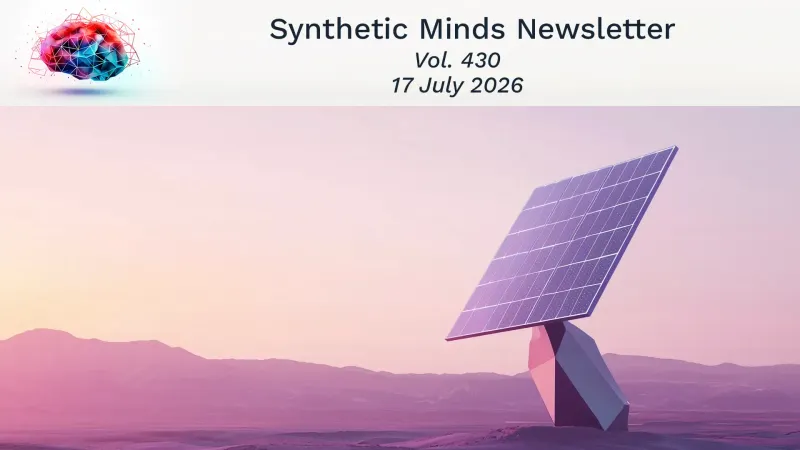
A quarter of Europe's electricity has come from sunlight. The first time solar has beaten gas, nuclear, and everything else. The cells that set the efficiency record, and the batteries lined up to firm that power, were built somewhere else.
Read the energy headlines together and a milestone turns into a dependency. Europe owns the achievement. It owns almost none of the machine that produced it.
Solar supplied a quarter of EU electricity, overtaking every other source for the first time.
The most efficient solar cell ever certified, 35.5% in a silicon-perovskite tandem, carries a Chinese flag, the fourth such record in a row.
The batteries set to steady that solar are Chinese too: CATL has agreed to deploy five billion watt-hours of sodium-ion storage across Europe, through a Dutch partner.
And the rulebook for the next battery, the first national standard defining a solid-state cell, has taken effect in Beijing, before Europe has written its own.
That's the solar story. Here is the signal.
Europe owns the sunlight. It rents almost every layer beneath it.
This is the trap of counting megawatts. A country can hit a clean-power record while the cells, the chemistry, the storage, and the definitions all belong to someone else. The advantage in any system flows to whoever builds the hardware and writes the standards, not to whoever installs the panels.
There is a bitter twist folded into the good news. The move to sodium was meant to cut dependency, because sodium is cheap and abundant where lithium is scarce and fought over.
Instead it deepens a different one. The cheapest sodium cell and the standard that governs it trace to the same country.
Trading a mineral dependency for a manufacturing-and-standards dependency is not diversification, but is more concentration wearing a green label.
The argument that the grid's new power plant had become a line of code nobody owns named the software layer. This is the layer underneath it, the steel, the chemistry, the rulebook.
Standards are the quiet part. Whoever defines what a solid-state battery is decides what the rest of the world may sell as one.
So the question your board should debate is not how fast you can decarbonize. It is whether you can decarbonize on a supply chain, and a rulebook, you do not control, and what that costs the day it stops being commercial and turns political.
Europe has learned to generate clean power. It has not yet learned to make the things that make it, and the gap between those two is where the real advantage sits.
The Intelligence Age Scorecard
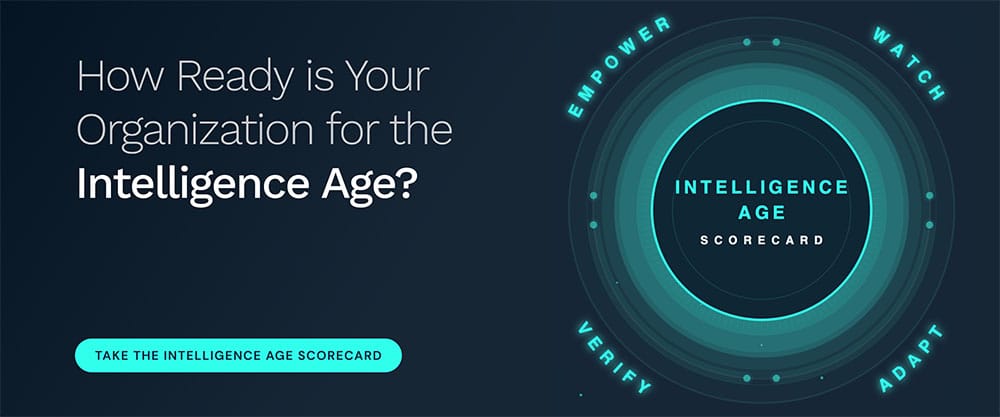
Solar has become Europe's largest power source, yet the record cells, the grid batteries, and the standard defining the next chemistry all trace to one country. WAVE, Watch, Adapt, Verify, Empower, asks which part of the cycle this demands: are you still watching your carbon numbers, or already adapting to who owns the supply chain beneath them?
Benchmark your readiness for the next two quarters with the Intelligence Age Scorecard. Or read the public Intelligence Age Scorecard of Accenture, IBM, Visa, Qantas, Woolworths, Telstra or Commonwealth Bank first.
If this newsletter was forwarded to you, you can sign up here.
Thank you.
Mark
Frequently asked questions
How much of Europe's electricity now comes from solar?
Solar has supplied a quarter of EU electricity, overtaking every other source, including gas and nuclear, for the first time. This marked a milestone where sunlight became the largest single power source across the European Union.
Link to this questionWho makes the world's most efficient solar cells?
The most efficient solar cell ever certified, reaching 35.5% efficiency in a silicon-perovskite tandem design, carries a Chinese flag. This was the fourth consecutive efficiency record set by Chinese manufacturers, meaning the top-performing hardware behind Europe's solar surge originates outside Europe.
Link to this questionWhy doesn't switching to sodium-ion batteries reduce dependency?
Sodium was chosen because it is cheap and abundant, unlike scarce and contested lithium, with the goal of cutting dependency. However, the cheapest sodium cell and the national standard governing it both trace to the same country, so the shift replaces a mineral dependency with a manufacturing and standards dependency instead of achieving real diversification.
Link to this questionWhy do standards matter more than who installs the panels?
Whoever defines what a battery like a solid-state cell is decides what the rest of the world may sell as one, meaning control over standards shapes the entire market beneath the visible hardware. The real advantage in clean energy flows to whoever builds the machinery and writes the rulebook, not to whoever simply installs panels or hits generation records.
Link to this question
Dr Mark van Rijmenam
Dr. Mark van Rijmenam, widely known as The Digital Speaker, isn’t just a #1-ranked global futurist; he’s an Architect of Tomorrow who fuses visionary ideas with real-world ROI. As a global keynote speaker, Global Speaking Fellow, recognized Global Guru Futurist, and 5-time author, he ignites Fortune 500 leaders and governments worldwide to harness emerging tech for tangible growth.
Recognized by Salesforce as one of 16 must-know AI influencers , Dr. Mark brings a balanced, optimistic-dystopian edge to his insights—pushing boundaries without losing sight of ethical innovation. From pioneering the use of a digital twin to spearheading his next-gen media platform Futurwise, he doesn’t just talk about AI and the future—he lives it, inspiring audiences to take bold action. You can reach his digital twin via WhatsApp at: +1 (830) 463-6967.