Synthetic Minds | The Financial Stack Moved On-Chain, Into Private Hands
Synthetic Minds | The Financial Stack Moved On-Chain, Into Private Hands
The Synthetic Minds newsletter offers short daily insights to get you thinking. If you enjoy it, please forward. All signals are powered by Futurwise. If you need more insights, subscribe to Futurwise and get 25% off for the first three months!
I have just launched the Intelligence Age Scorecard! It will help you understand how ready your organization is for the Intelligence Age.
Today’s topic: Tokenization
Who Backstops a Financial System Run Privately
The company guarding the ownership records behind Wall Street has run real trades of an S&P 500 fund and US government debt as tokens. The public referee meant to watch it missed its own deadline.
Look at the cycle whole and a system appears: settlement, money, the payment standard, and the price of truth have all moved on-chain at once, and into private hands.
The settlement layer went first. The firm guarding the records behind $114 trillion in securities has run live trades and transactions on private networks. The pilot illustrated how blockchain can streamline asset movement and reduce friction.
The payment layer followed. The x402 standard that lets software pay without a human has gained a neutral governing body, and Visa, Mastercard, American Express and Stripe have joined it rather than fought it.
Visa has opened a rail for banks to mint, move and manage digital dollars of their own.
Then the layer that proves what a tokenized asset is worth broke. An attacker forged Ostium's price feed with one privileged key and walked out with 18 million dollars.
Underneath, the cryptography is being re-poured. NEAR has shipped quantum-resistant signing to its main network in production.
That's the tokenization story. Here is the signal.
Every layer moved the same direction, toward private control. The record of who owns what, the issuance of the dollar, the rail that value travels on, and the price that says what anything is worth, each has a private company holding the pen.
That is not disintermediation. It is re-intermediation, swapping public institutions for private operators and private keys.
The one public referee in the room did not show. The dollar's federal rulebook has reached its legal deadline with the rules unfinished and the central bank offering no framework of its own. A market above three hundred billion dollars is setting its architecture while the supervisor is absent, which rewards the incumbents with scale and licenses and quietly thins the field.
The Ostium break is the tell. When the thing that certifies value is a single stolen key, the certificate proves nothing, and the loss lands on ordinary lenders inside one block.
The argument that the United States outsourced its digital currency named the issuer and the rails. This is the sequel: the ledger, the standard, and the price of truth have moved to private hands as well.
The last time private clearinghouses ran settlement without a public backstop, it took the Panic of 1907 to build one.
The question is no longer whether to tokenize. It is who backstops you when the ledger, the dollar, and the price feed are privately run, and whether that sits in any contract you hold.
The Intelligence Age Scorecard
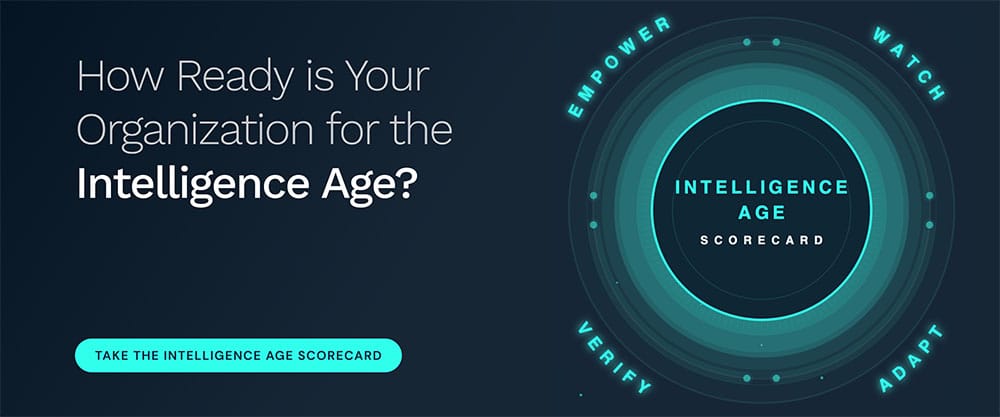
The securities ledger, the dollar's rail, the payment standard, and the price feed have all moved into private hands in a single stretch, and the public supervisor arrived late. The WAVE Framework — Watch, Adapt, Verify, Empower — asks which move this demands of you: are you still watching this shift, or should you already be verifying who your backstop is?
Benchmark your readiness for the next two quarters with the Intelligence Age Scorecard. Or read the public Intelligence Age Scorecard of Accenture, IBM, Visa, Qantas, Woolworths, Telstra or Commonwealth Bank first.
If this newsletter was forwarded to you, you can sign up here.
Thank you.
Mark
Frequently asked questions
What does it mean that the financial system moved into private hands?
It means that four key layers of finance—settlement records, the issuance of the dollar, the payment standard, and the price feed that values assets—have each come under the control of private companies holding the pen rather than public institutions. This is described as re-intermediation: swapping public institutions for private operators and private keys, rather than true disintermediation.
Link to this questionWhat happened with the Ostium price feed attack?
An attacker forged Ostium's price feed using a single privileged key and walked out with 18 million dollars. This is presented as a warning sign: when the mechanism certifying an asset's value depends on one stolen key, the certificate proves nothing, and losses land on ordinary lenders within a single block.
Link to this questionWhy does the absence of a public regulator matter here?
The dollar's federal rulebook reached its legal deadline with rules unfinished, and the central bank offered no framework of its own. This leaves a market worth over three hundred billion dollars setting its own architecture without a supervisor present, which rewards incumbents with existing scale and licenses while quietly thinning out competition.
Link to this questionWhat is the x402 payment standard and who backs it?
The x402 standard allows software to make payments without human involvement. It has gained a neutral governing body, and major payment companies including Visa, Mastercard, American Express and Stripe have joined it rather than resisting it, while Visa has also opened a rail letting banks mint, move and manage their own digital dollars.
Link to this question
Dr Mark van Rijmenam
Dr. Mark van Rijmenam, widely known as The Digital Speaker, isn’t just a #1-ranked global futurist; he’s an Architect of Tomorrow who fuses visionary ideas with real-world ROI. As a global keynote speaker, Global Speaking Fellow, recognized Global Guru Futurist, and 5-time author, he ignites Fortune 500 leaders and governments worldwide to harness emerging tech for tangible growth.
Recognized by Salesforce as one of 16 must-know AI influencers , Dr. Mark brings a balanced, optimistic-dystopian edge to his insights—pushing boundaries without losing sight of ethical innovation. From pioneering the use of a digital twin to spearheading his next-gen media platform Futurwise, he doesn’t just talk about AI and the future—he lives it, inspiring audiences to take bold action. You can reach his digital twin via WhatsApp at: +1 (830) 463-6967.