Synthetic Minds | The Metaverse is Moving from the Headset to the Cortex
Synthetic Minds | The Metaverse is Moving from the Headset to the Cortex
The Synthetic Minds newsletter offers short daily insights to get you thinking. If you enjoy it, please forward. All signals are powered by Futurwise. If you need more insights, subscribe to Futurwise and get 25% off for the first three months!
I built the Intelligence Age Scorecard! It will help you understand how ready your organization is for the Intelligence Age.
Today’s topic: Spatial Intelligence & BCIs
The Forest Your Brain Sees Without Eyes
Sit at home in a chair, eyes closed, nothing on your head, and stand in a forest. You see the light through the canopy. You smell the pine. You hear the birds. None of it is in the room.
That is not the metaverse strapped to your face. It is the metaverse relocating to the cortex, where an experience can be written with no source in the outside world.
A team has shown that stimulating the part of the brain that feels conjures a touch with nothing touching the skin, with the feeling lasting as long as the current flows. The stimulation stays safe, stable, and correctly placed for up to a decade, across 168 million pulses in five people, with no serious harm.
A closed-loop system reads a paralyzed person's intention and returns the feeling of their own hand in the same moment.
A published roadmap points the next interfaces at writing mood and memory, depression and trauma, an opportunity that dwarfs paralysis.
A defense program, DARPA's Firefox, aims to read and write the brain with no surgery at all.
And a Chinese state insurer has written the first policy to pay for the implant, one move in a national push to own the rails.
That is the BCI story. Here is the signal.
The senses were the one part of being human that came from the world unmediated. That is ending. The question stops being how to restore a lost sense and becomes how to author one that was never there.
The primitives already exist. A touch with nothing touching you. A spark of light no photon caused. Stimulate the smell region and a person tastes a lemon that is not in the room. Each is crude and single, and a coherent forest is far away, yet each is a pixel of the same picture.
The contest over who controls attention and experience named the screen and the glasses. This moves inside the skull, past the eyes and ears entirely.
That is an experience layer with no headset, for media, presence, training, and travel without travel, and eventually senses no human was born with. Think of perceiving Earth's magnetic field, or achieving infrared vision. The builders who treat perception as a design surface will define the category before the laggards see it exists.
Here is the terrain to design around. If a device can author a convincing forest, it can author anything you take to be real, and the answer to who decides what gets written is being settled between two governments, one building the optics, the other writing the insurance and the standards.
The senses were the last thing we assumed no one could edit. That is changing, and the question is which experiences you will author when reality itself becomes something you design.
The Intelligence Age Scorecard
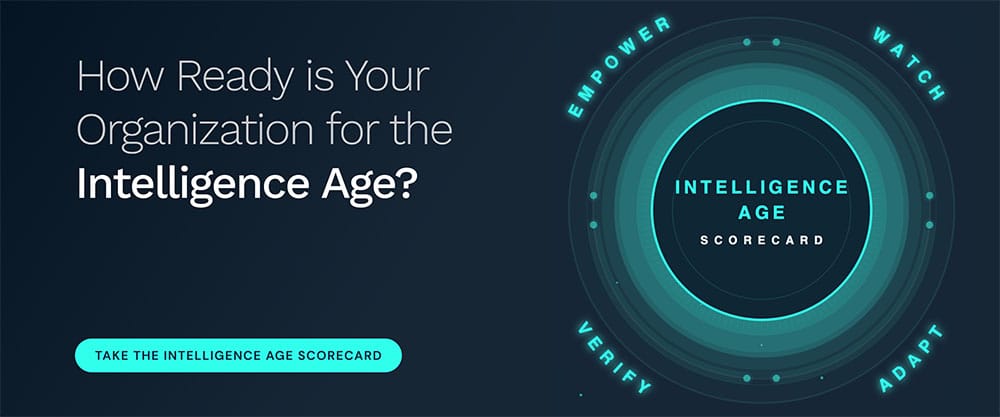
Perception has crossed from something machines read to something they author, and the rails to deploy it are forming across a US-China divide. The WAVE Framework, Watch, Adapt, Verify, Empower, poses the question: are you still watching neural interfaces as science fiction, or should you already be deciding where authored experience touches your products and your people?
Benchmark your readiness for the next two quarters, and the next five years, with the Intelligence Age Scorecard. Or read the public Intelligence Age Scorecard of Verizon, Accenture, IBM, Visa, Qantas, Woolworths, Telstra or Commonwealth Bank first.
If this newsletter was forwarded to you, you can sign up here.
Thank you.
Mark
Frequently asked questions
How can brain stimulation create sensations without physical touch?
By stimulating the part of the brain that processes feeling, researchers can conjure a touch sensation even though nothing is physically touching the skin. The feeling lasts as long as the electrical current flows, and this stimulation has been shown to remain safe, stable, and correctly placed for up to a decade across many pulses delivered to a small group of people, without serious harm.
Link to this questionWhat is a closed-loop brain-computer interface system used for?
A closed-loop system reads a paralyzed person's intention and returns the feeling of their own hand in the same moment, restoring a sense of touch through direct brain stimulation rather than physical contact. This demonstrates how brain-computer interfaces can both interpret neural signals and write sensory experiences back into the brain in real time.
Link to this questionWhy does authored perception matter beyond restoring lost senses?
The senses were once the one part of being human that came directly from the world unmediated, but that is ending. Instead of only restoring senses people have lost, such as touch for paralyzed individuals, the technology raises the possibility of authoring entirely new sensory experiences, such as perceiving Earth's magnetic field or gaining infrared vision, turning perception into a design surface.
Link to this question
Dr Mark van Rijmenam
Dr. Mark van Rijmenam, widely known as The Digital Speaker, isn’t just a #1-ranked global futurist; he’s an Architect of Tomorrow who fuses visionary ideas with real-world ROI. As a global keynote speaker, Global Speaking Fellow, recognized Global Guru Futurist, and 5-time author, he ignites Fortune 500 leaders and governments worldwide to harness emerging tech for tangible growth.
Recognized by Salesforce as one of 16 must-know AI influencers , Dr. Mark brings a balanced, optimistic-dystopian edge to his insights—pushing boundaries without losing sight of ethical innovation. From pioneering the use of a digital twin to spearheading his next-gen media platform Futurwise, he doesn’t just talk about AI and the future—he lives it, inspiring audiences to take bold action. You can reach his digital twin via WhatsApp at: +1 (830) 463-6967.